
Blog
-
AIV (Autonomous Intelligent Vehicles): Meaning, Technology, Benefits & Future
AIV (Autonomous Intelligent Vehicles) are vehicles capable of sensing their environment, making decisions, and navigating without human intervention. These vehicles rely on Artificial Intelligence (AI), Machine Learning, sensors, and real-time data processing to operate safely and efficiently.
Unlike traditional vehicles that depend entirely on human drivers, AIVs are designed to:
- Understand road conditions
- Detect obstacles and pedestrians
- Predict traffic behavior
- Take autonomous driving decisions
In simple terms, AIVs think, learn, and drive on their own.
2. How Autonomous Intelligent Vehicles Work
At the core of AIV is a decision-making AI brain that processes massive amounts of real-time data.
The basic workflow:
- Perception – Sensors scan the environment
- Interpretation – AI understands what’s happening
- Decision Making – System decides acceleration, braking, or turning
- Execution – Vehicle performs the action
All of this happens in milliseconds, faster than human reflexes.
3. Key Technologies Behind AIV
4
a. Artificial Intelligence & Machine Learning
AI allows vehicles to learn from driving data, improve decision-making, and adapt to new road scenarios.
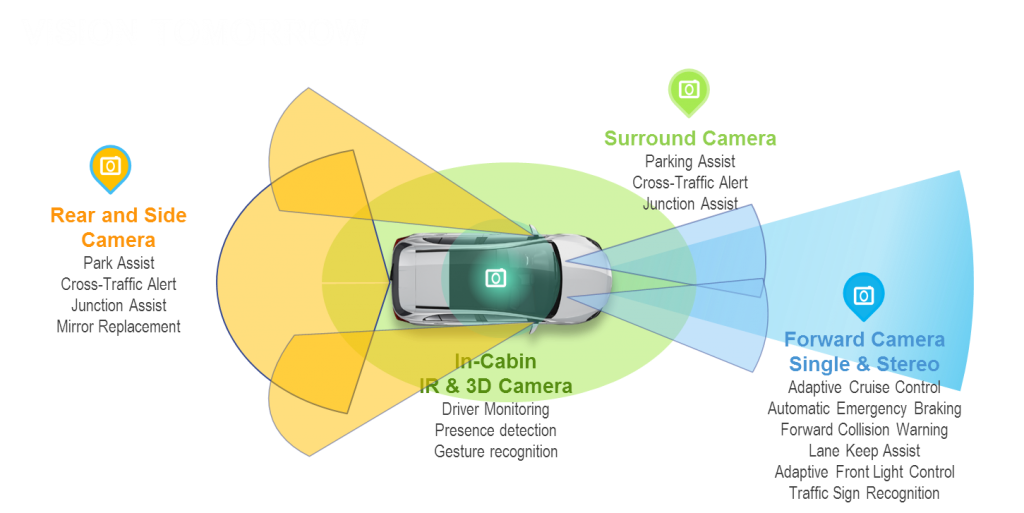
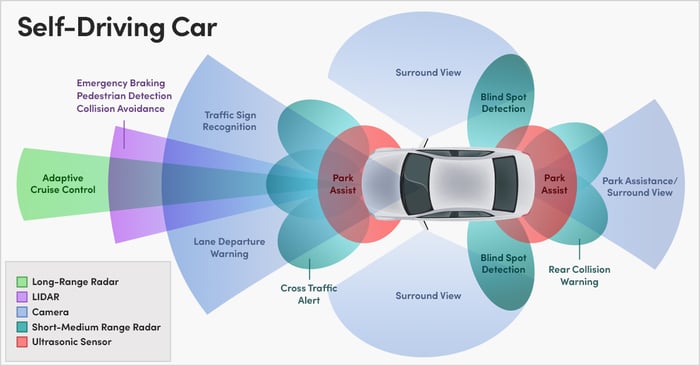
b. Sensors & Hardware
- LiDAR – 3D mapping of surroundings
- Radar – Distance and speed detection
- Cameras – Lane detection, object recognition
- Ultrasonic Sensors – Close-range awareness
c. High-Performance Computing
Powerful onboard computers process data from all sensors simultaneously.
d. HD Maps & GPS
Ultra-precise maps help vehicles understand road geometry, signals, and landmarks.
e. V2X Communication
Vehicles communicate with:
- Other vehicles (V2V)
- Traffic signals (V2I)
- Infrastructure (V2X)
